Manufactured Home Water Damage in Hesperia, CA
Manufactured homes hide water in places a slab home does not have: the belly pan, the insulation above it and a particleboard subfloor that swells. The restoration team knows where to look and how to dry it.
(888) 774-9605Call about a Hesperia manufactured home leak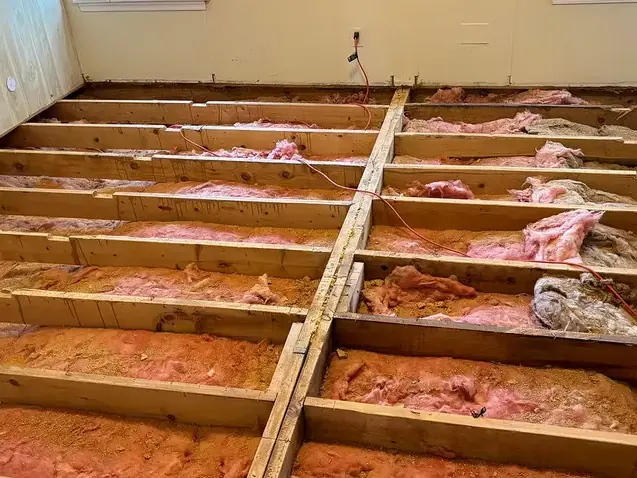
What does manufactured home water damage cost in Hesperia, CA?
In Hesperia, CA, manufactured home water damage restoration typically runs $1,500 to $9,000, depending on how much belly insulation is wet, whether subfloor sections must be replaced and how many rooms the water reached.
Small under-floor leak
$1,500 to $3,200- Belly drained
- Wet insulation removed
- Floor cavity drying
Soft subfloor areas
$3,200 to $6,000- Subfloor sections cut out
- Joist drying
- Daily readings
Widespread damage
$6,000 to $9,000+- Multiple rooms
- Marriage line work
- Extended drying
For a closer planning number, try the water damage cost calculator. A firm price comes from the restoration company after it sees the damage.
What to do first: manufactured home water damage in Hesperia
Shut the water
Close the main valve, usually near where the supply enters under the home.
Stay off soft spots
Keep weight off soft or bouncy floor areas.
Look underneath safely
From outside, note any sagging belly or water dripping, without crawling under.
Photograph the damage
Take photos inside and of the skirting and underside you can see.
How manufactured home water damage is handled in Hesperia
- 1
Map the moisture
The tech who does the walkthrough maps moisture with thermal imaging and pinless meters before any equipment goes down.
- 2
Pull the water
The extraction crew removes standing water with truck-mounted extraction so it leaves the building instead of spreading.
- 3
Set the drying
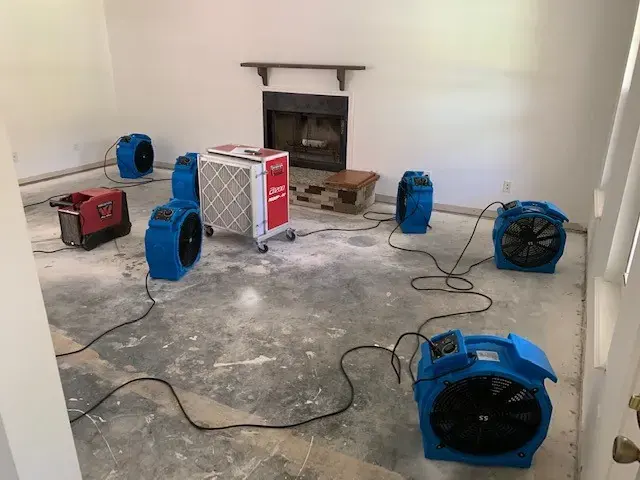
The drying team sizes air movers and LGR dehumidifiers to each room's evaporation load and runs them around the clock.
- 4
Read, log, verify
The team logs readings daily until wet materials sit within 2 to 4 points of a dry reference, then the file goes to the claim.
Manufactured homes are common on Hesperia's larger rural lots, especially on the east side toward the Mojave River and out toward Oak Hills. They are built differently from site-built houses, and water damage in them behaves differently. The supply lines usually run under the floor, inside the belly insulation, protected by a thin fabric or plastic belly pan underneath.
Where the water goes
- Under-floor supply line leaks fill the belly pan like a bag and sag it
- Wet insulation above the pan holds water against the floor
- Particleboard and OSB subfloors swell and soften when they stay wet
- Leaks at the marriage line of a double-wide travel between the two halves
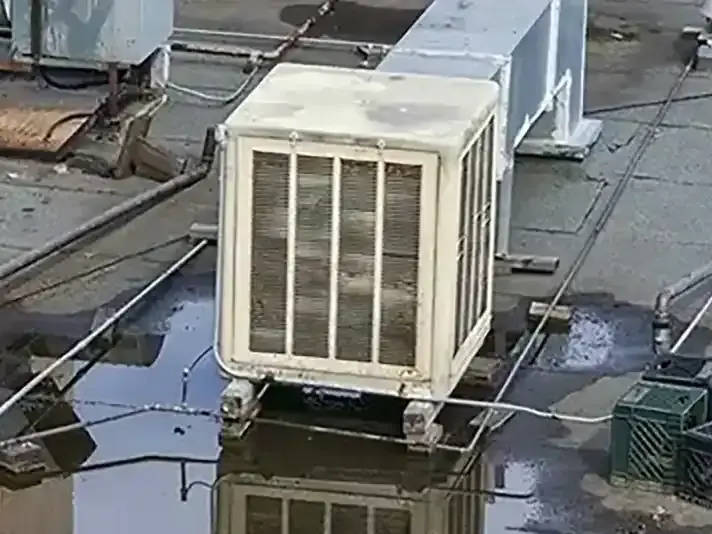
- Roof-mounted cooler and roof seam leaks run down inside the walls
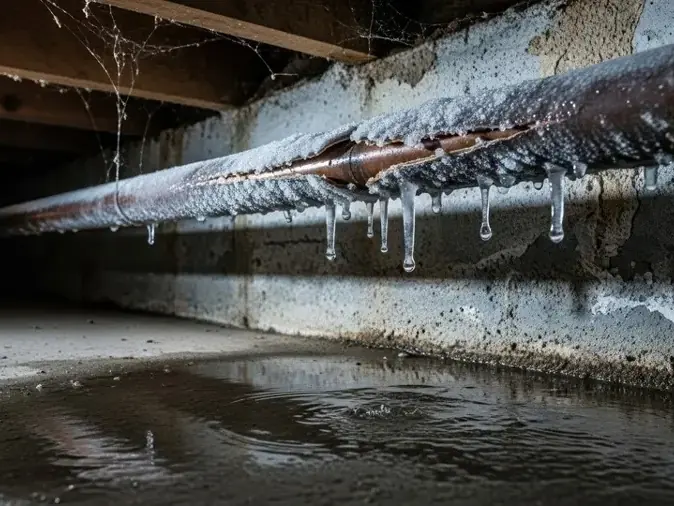
Freeze risk under the floor
Supply lines under a manufactured home are exposed to cold air on the coldest nights, especially where skirting is damaged or heat tape has failed. A freeze split often shows up as a sagging belly or a soft spot near the kitchen or bathroom. The tech who does the walkthrough checks the underside, not just the floor inside.
Swollen particleboard does not shrink back when it dries. Sections that have lost strength are cut out and replaced after the framing is dry, while firm sections are dried in place.
Drying a manufactured home
The belly pan is opened to drain the water and remove wet insulation, then air is directed into the floor cavity along with dehumidifiers inside the home. Readings on the joists and subfloor decide when it is done. HUD sets the construction standards for these homes through its Manufactured Housing Program, and Ready.gov has cold-weather tips for protecting exposed pipes.
- The belly pan is opened to drain and dry
- Wet belly insulation is removed
- Swollen particleboard is replaced after drying
- Joists and subfloor are metered daily
Water still moving in a Hesperia home or business?
(888) 774-9605Get the subfloor driedManufactured Home Water Damage in Hesperia: common questions
Why is the bottom of my manufactured home sagging?
A sagging belly pan often means a supply or drain line is leaking under the floor and water is collecting in the insulation. Shut the water off and have it checked.
Can a soft particleboard floor be saved?
Firm sections are dried in place. Particleboard that has swollen and lost strength is cut out and replaced after the framing dries.
How are manufactured homes dried differently?
The belly is opened to drain water and remove wet insulation, then air and dehumidification are directed into the floor cavity as well as the rooms.
Do manufactured home pipes freeze in Hesperia?
They can. Lines under the floor are exposed where skirting is damaged or heat tape has failed, especially on the coldest winter nights.
Is a marriage line leak a big problem?
It can be, because water travels between the two halves of a double-wide. Both sides of the joint are metered.
Is manufactured home water damage covered?
Sudden water damage is often covered by a manufactured home policy, with limits that vary. Coverage depends on your policy, so it is worth checking with your own insurer.
More water damage services in Hesperia
Where the team handles manufactured home water damage around Hesperia
Manufactured Home Water Damage in every Hesperia ZIP code, Oak Hills and the neighboring Victor Valley communities.
The restoration team covers all of Hesperia, from Main Street and Bear Valley Road to Ranchero Road and the Mojave River, plus Oak Hills, Summit Valley, Victorville, Apple Valley and Adelanto.
ZIP codes 92340, 92344 and 92345.
See every area coveredSoft floors or a sagging belly? Call now.
Water trapped in a manufactured home's belly keeps soaking the subfloor. The restoration team handles manufactured homes across Hesperia and the Victor Valley.