Structural Drying in Hesperia, CA
Dry desert air helps, but it does not dry a wet wall cavity, slab or subfloor on its own. The drying team sizes equipment to each room and keeps it running until the readings say dry.
(888) 774-9605Get Hesperia structural drying started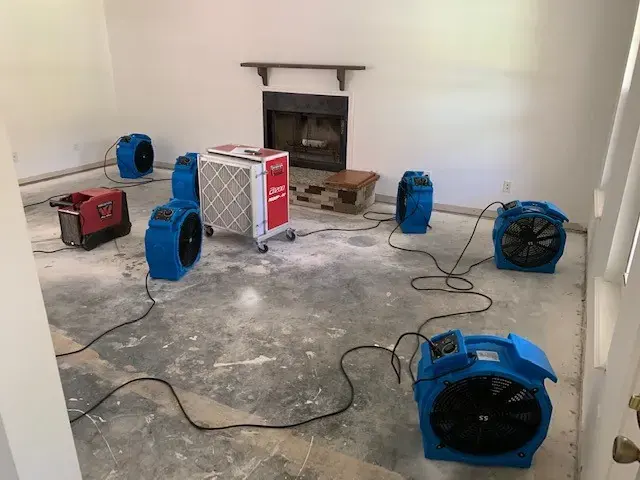
What does structural drying cost in Hesperia, CA?
In Hesperia, CA, structural drying typically runs $1,000 to $6,000, depending on the class of loss, how many rooms and materials are wet, whether concrete or hardwood is involved and how many days the equipment runs.
One room, Class 1 or 2
$1,000 to $2,200- Air movers and one dehumidifier
- Daily readings
- Drying log
Several rooms
$2,200 to $4,200- Multiple air movers
- LGR dehumidifiers
- Cavity drying
Class 4 materials
$4,200 to $6,000+- Desiccant dehumidifiers
- Slab or hardwood drying
- Extended monitoring
For a closer planning number, try the water damage cost calculator. A firm price comes from the restoration company after it sees the damage.
What to do first: structural drying in Hesperia
Leave equipment running
Keep air movers and dehumidifiers on around the clock, even at night.
Keep doors closed
Close windows and doors to the drying area so the dehumidifiers can work.
Do not move the setup
Leave air movers where they were placed; each one is aimed at a wet surface.
Watch for changes
Tell the drying team about new stains, smells or soft spots.
How structural drying is handled in Hesperia
- 1
Map the moisture
The tech who does the walkthrough maps moisture with thermal imaging and pinless meters before any equipment goes down.
- 2
Pull the water
The extraction crew removes standing water with truck-mounted extraction so it leaves the building instead of spreading.
- 3
Set the drying
The drying team sizes air movers and LGR dehumidifiers to each room's evaporation load and runs them around the clock.
- 4
Read, log, verify
The team logs readings daily until wet materials sit within 2 to 4 points of a dry reference, then the file goes to the claim.
Structural drying is the part of a water loss people see least and depend on most. It is the difference between a room that looks dry and a room where the framing, drywall, subfloor and slab are actually back to normal moisture levels. Anything short of that leaves water behind the paint.
How the drying plan is set
- Moisture mapping with thermal imaging and pinless meters marks what is wet
- A dry reference reading is taken from an unaffected part of the same home
- The class of loss, Class 1 through 4, sets how much equipment each room needs
- Air movers are placed to move air across wet surfaces
- LGR dehumidifiers pull the moisture back out of the air, with desiccant units for dense Class 4 materials
Why High Desert air is not enough
Low outdoor humidity helps once materials are dry at the surface, but water deep in a slab, a wall bottom plate or a particleboard subfloor moves out slowly. Opening windows can also pull in dust and, on a cold night, slow evaporation down. A closed drying chamber with controlled airflow and dehumidification dries faster and more predictably.
The drying goal is a number, not a date. Wet materials are dried to within 2 to 4 points of the dry reference reading, and equipment stays until they get there.
Daily readings and the drying log
The drying team records temperature, humidity and material readings every day. That drying log shows the insurer the structure was dried to standard and shows you nothing was left wet behind a wall. The EPA explains why wet materials need to dry inside 24 to 48 hours, and OSHA covers safety around drying equipment and wet electrical systems.
- Class 1 through 4 sets how much equipment a room needs
- LGR dehumidifiers, desiccants for Class 4
- Dried to within 2 to 4 points of a dry reference
- Daily psychrometric readings in the drying log
Water still moving in a Hesperia home or business?
(888) 774-9605Start the drying equipmentStructural Drying in Hesperia: common questions
How long does structural drying take?
A contained Class 1 loss usually dries in three to five days. Hardwood, plaster, concrete and multi-layer flooring take longer. Equipment comes out when readings meet the goal.
Why can't I just open the windows?
Open windows help surface drying but do little for water inside walls and slabs, and they bring in dust and cold air. A controlled drying chamber is faster and more reliable.
What is a dry reference reading?
A moisture reading taken from the same material in an unaffected part of the home. The wet materials are dried until they read within 2 to 4 points of it.
Why is the equipment so loud?
Air movers push a lot of air across wet surfaces. They run continuously because stopping them slows drying and lets moisture settle back in.
What is Class 4 water damage?
Class 4 is water in dense materials such as concrete, hardwood and plaster. It often needs desiccant dehumidifiers or specialty drying and takes longer.
Can the equipment be turned off at night?
It should stay on. Drying works around the clock, and readings are taken daily to adjust the setup.
More water damage services in Hesperia
Where the team handles structural drying around Hesperia
Structural Drying in every Hesperia ZIP code, Oak Hills and the neighboring Victor Valley communities.
The restoration team covers all of Hesperia, from Main Street and Bear Valley Road to Ranchero Road and the Mojave River, plus Oak Hills, Summit Valley, Victorville, Apple Valley and Adelanto.
ZIP codes 92340, 92344 and 92345.
See every area coveredWalls and floors still wet after a leak? Call now.
Water left in framing and slabs keeps causing damage. The drying team dries homes and businesses across Hesperia to a measured goal.