Monsoon Flash Flood Cleanup in Hesperia, CA
A July or August thunderstorm can drop more rain on hard desert ground than it can absorb, and the runoff comes through garage doors and sliders carrying mud. The restoration team removes it, cleans and dries the structure.
(888) 774-9605Call about Hesperia storm flooding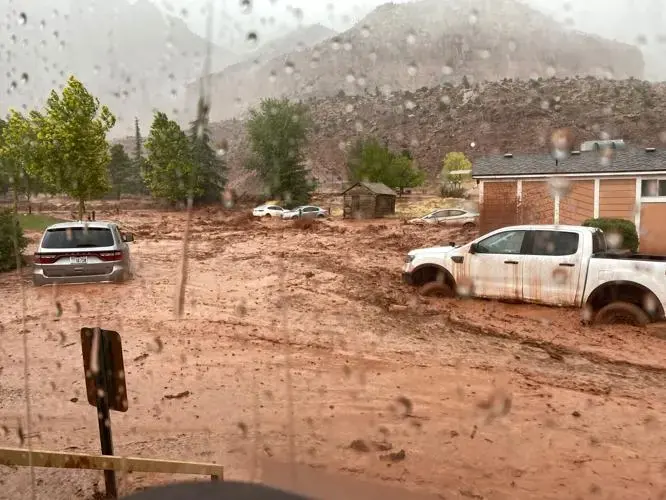
What does monsoon flash flood cleanup cost in Hesperia, CA?
In Hesperia, CA, monsoon flash flood cleanup typically runs $2,500 to $15,000 or more, depending on how much mud came in, how many rooms were reached, how much drywall and flooring must be removed and how long drying takes.
Garage or one room
$2,500 to $5,000- Mud removal
- Contaminated flooring out
- Antimicrobial and drying
Several rooms
$5,000 to $10,000- Drywall cut above the water line
- Carpet and pad removal
- Structural drying
Whole home
$10,000 to $15,000+- Full tear-out where wet
- Containment
- Extended slab drying
For a closer planning number, try the water damage cost calculator. A firm price comes from the restoration company after it sees the damage.
What to do first: monsoon flash flood cleanup in Hesperia
Stay out of moving water
Wait until the runoff stops. Moving water and mud can knock a person down.
Cut the power safely
If water reached outlets, turn off breakers only if the panel is dry and you can reach it without standing in water.
Document everything
Photograph the water line on walls, the mud and damaged belongings before cleanup.
Keep people and pets clear
Treat the water as contaminated and keep children and pets away from it.
How monsoon flood cleanup is handled in Hesperia
- 1
Map the moisture
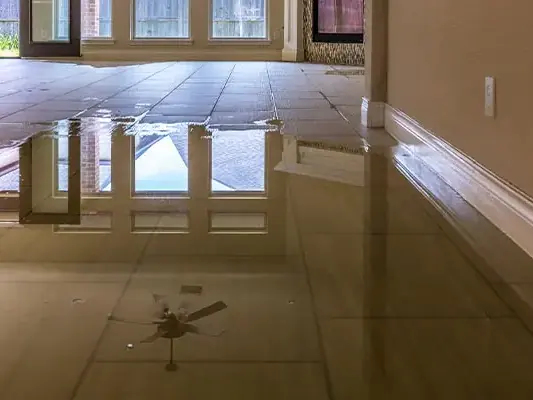
The tech who does the walkthrough maps moisture with thermal imaging and pinless meters before any equipment goes down.
- 2
Pull the water
The extraction crew removes standing water with truck-mounted extraction so it leaves the building instead of spreading.
- 3
Set the drying
The drying team sizes air movers and LGR dehumidifiers to each room's evaporation load and runs them around the clock.
- 4
Read, log, verify
The team logs readings daily until wet materials sit within 2 to 4 points of a dry reference, then the file goes to the claim.
The Victor Valley monsoon season usually runs from July into September. Storms build over the San Bernardino Mountains and the desert, then drop heavy rain in a short burst. Desert soil baked hard in the summer sheds that water instead of soaking it up, so it runs down washes, dirt roads and driveways and finds the lowest door on the property.
Why flash flood water is handled as Category 3
Runoff that crosses yards, roads and septic areas carries soil, animal waste, fuel and whatever else was on the ground. Under the IICRC S500 standard, water from outside the home is Category 3, the same as sewage. That changes the job:
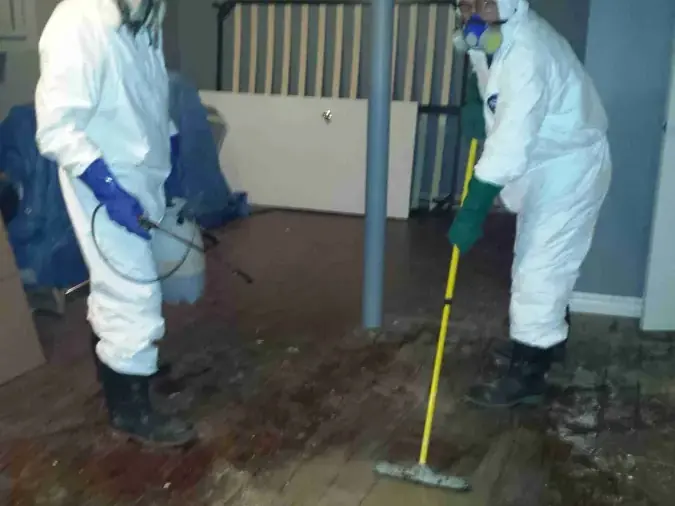
- Mud and debris are shoveled and squeegeed out before extraction
- Carpet, pad and soaked drywall touched by the water are removed, not dried
- Hard surfaces are cleaned and treated with an EPA-registered antimicrobial
- Only then does structural drying start, with readings taken daily
Garages, sliders and slab edges
Most Hesperia flood calls start at a garage door, a patio slider or a low block wall. Water pushes under the door, crosses the garage and enters the house at the step or the laundry room. The tech who does the walkthrough follows that path with meters, because water often travels under baseboards and into the next room long after the mud is cleaned up.
Flash floods can rise in minutes and carry cars. Do not walk or drive through moving water. Wait for it to stop, then document the damage with photos before cleanup starts.
Drying after the mud is gone
Once the contaminated materials are out, the drying team sets air movers and LGR dehumidifiers and checks the slab, framing and wall bottoms daily. The National Weather Service explains flash flood safety in its Turn Around Don't Drown page, and Ready.gov covers what to do after the water recedes.
- Outdoor flood water is Category 3 under IICRC S500
- Porous materials touched by it are removed
- Surfaces get an EPA-registered antimicrobial
- Drying starts only after the mud is out
Water still moving in a Hesperia home or business?
(888) 774-9605Get the mud and water outMonsoon Flash Flood Cleanup in Hesperia: common questions
Is monsoon flood damage covered by homeowners insurance?
Surface water that flows in from outside is usually excluded from standard homeowners policies and falls under flood coverage. Rain that comes through a damaged roof may be treated differently. Coverage depends on your policy, so it is worth checking with your own insurer.
Why does my carpet have to go after a flash flood?
Flood runoff is Category 3 water. Porous materials it touches, including carpet, pad and the bottom of the drywall, are removed instead of dried because they cannot be reliably cleaned.
How long does cleanup take?
Mud removal and tear-out often take a day or two. Drying usually runs three to five days after that for a contained area, longer for a slab that soaked for hours.
Can I hose the mud out myself?
Hosing adds more water to the structure. Shovel and squeegee the heaviest mud if it is safe, wear gloves and boots, and leave the rest for the crew with pumps and extraction.
What can I do to protect the house next storm season?
Keep drainage paths around the house clear, grade soil away from the slab, and consider a berm or sandbags at the garage door if the lot sits below a wash or dirt road.
Are septic systems affected by flooding?
Yes. A flooded leach field cannot take water, so drains may back up after a storm. Limit water use until the ground dries, and call if sewage comes up inside.
More water damage services in Hesperia
Where the team handles monsoon flash flood cleanup around Hesperia
Monsoon Flash Flood Cleanup in every Hesperia ZIP code, Oak Hills and the neighboring Victor Valley communities.
The restoration team covers all of Hesperia, from Main Street and Bear Valley Road to Ranchero Road and the Mojave River, plus Oak Hills, Summit Valley, Victorville, Apple Valley and Adelanto.
ZIP codes 92340, 92344 and 92345.
See every area coveredRunoff and mud inside after a storm? Call now.
Flood water keeps soaking into slab and drywall while it sits. The restoration team handles monsoon flooding across Hesperia and the Victor Valley.